
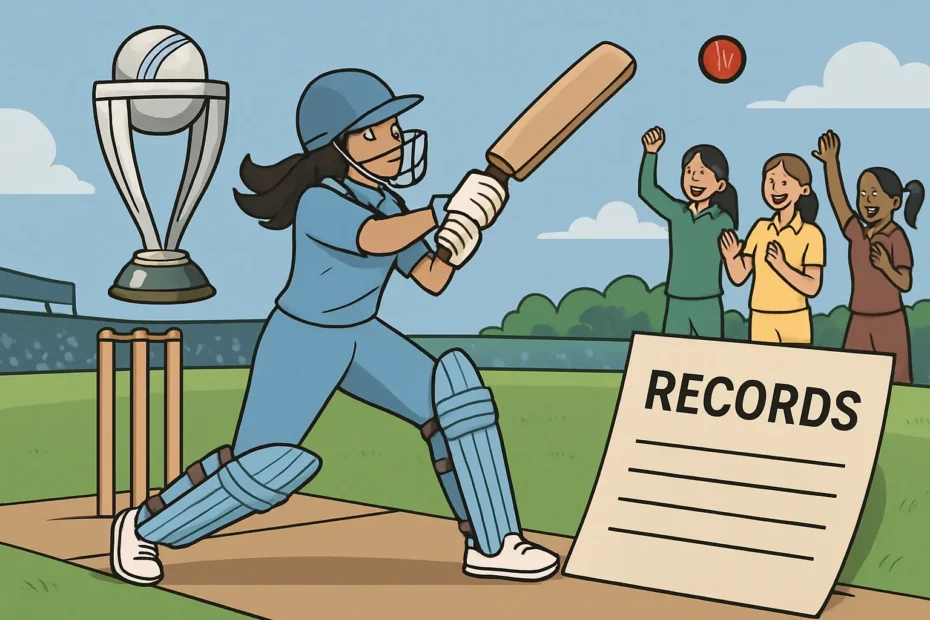
The first women’s ODI World Cup unfolded in England, used a round-robin format, and was won by England under Rachael Heyhoe Flint. Seven teams took part, including national sides and composite elevens, and the tournament quietly changed the course of the sport.
A tournament that redefined cricket did not begin with fireworks. It began with letters, shared train tickets, borrowed sweaters, and a stubborn conviction that women’s cricket belonged on the biggest possible stage. The first women’s Cricket World Cup was organized with a clarity of purpose that still feels radical. It arrived before the men’s version, set the template for the women’s one-day international game, and proved that the best in the world could deliver a compelling, tactical, high-skill event in a new format. The pitches were green in places, the outfields slow on some county grounds, and the coaching conversations were pragmatic rather than poetic. Yet the cricket was thrilling. There were centuries, incisive spells, and pressure moments shaped by the calmest heads in a dressing room culture held together with grit.
Origins and organization driven by pioneers
The story begins with a movement rather than a schedule. England’s captain Rachael Heyhoe Flint had spent seasons pushing doors open, lobbying administrators, writing to potential sponsors, and persuading county clubs to stage matches. The domestic Women’s Cricket Association in England did the unglamorous heavy lifting: logistics, billets, kit, even community outreach to ensure local crowds would turn up. A prominent benefactor stepped in to underwrite much of the cost, an act of faith that stitched together travel, accommodation, and ground fees at a time when broadcast revenue was nonexistent for women’s sport.
Crucially, the idea of a world tournament did not wait for perfect conditions. It was built on the belief that genuine international competition would accelerate skills, visibility, and credibility. The event became the first global one-day competition the sport had ever seen. That simple fact is a lantern in the history of cricket: the women’s world cup started before the men’s, and it did so on English soil in early-summer light, with long shadows stretching across outfields as the latter overs closed.
Format, structure, and the birth of women’s ODI cricket
The structure was elegant and demanding. Seven teams met in a single round-robin, each side playing every other side once. There were no semi-finals, no grand final day in the conventional sense. The table told the truth. Consistency mattered more than one fireworks-laden performance. Strategy followed that logic: batters accumulated, captains valued control of run rate, and bowlers hunted wickets without conceding strings of boundaries. It was a thinking person’s tournament, and it fit the times.
The matches were one-day internationals before the term had muscle memory in the women’s game. Overs were longer than modern white-ball standards, and captains planned for long bowling spells requiring stamina and a layered field. The ball got soft, and the outfields could be forgiving. Singles mattered. Two through square mattered even more. Spinners had time to work a set-up. Seamers learned quickly that the new format punished impatience.
The opening week produced a landmark that sits at the heart of the format’s history: the first official women’s ODI was played, and within the first set of fixtures the tournament also saw its first century in women’s World Cup cricket. That knock came from an English opener, Lynne Thomas, a left-hander who drove with clarity and cut with conviction. Her hundred, partnered by Enid Bakewell’s measured dominance, felt like a manifesto for the entire event. Bat long. Bat smart. Build from the front. The women’s ODI belonged to batters who could shape innings rather than merely decorate them.
Teams and the shape of the field
The participant list captured both the reach of women’s cricket at the time and the resourcefulness of its organizers.
- England: Host, champions, and the side with the most complete blend of batting depth, seam options, and tactical nous. Captained by Rachael Heyhoe Flint, England set the tone.
- Australia: Hard-nosed and disciplined, Australia’s bowlers stacked dots into pressure spells, and the top order played straight. They would chase England across the tournament table and set standards that pushed everyone else to higher skills.
- New Zealand: Technically sound, quietly relentless, and always prepared. New Zealand’s batting guarded its wicket and their new-ball partnerships gave nothing away.
- Trinidad and Tobago: Caribbean flair manifested as aggressive strokes and athletic fielding. The team’s leadership leaned on unity and uncoached competitiveness gathered from regional club cricket.
- Jamaica: Another Caribbean unit defined by raw talent and bold intentions. On the toughest days they were still the side most likely to crack the game open with one magical over or a burst of boundaries.
- Young England: A developmental side representing England’s next generation. This team gave teenage and early-twenties cricketers exposure on the most serious stage they had ever seen, and they rewarded their selection panel with performances that were braver than their years.
- International XI: A composite team built to ensure depth and balance in the tournament, pulling together players who might otherwise have missed the opportunity. The XI brought a travelling spirit and an every-match-is-a-chance energy that many opponents found unnerving.
Squad lists in the newspapers of the time could read like volunteer rosters compared with modern professional outfits. Players trained around day jobs, wore blazers borrowed from county cupboards, and lived in the spare rooms of local supporters for the duration of certain legs of the tournament. None of that diminished the quality. If anything, it sharpened the edges.
Conditions, venues, and the rhythm of the tournament
County grounds across England hosted the matches. Outfields varied from springy to clingy, with freshly rolled wickets that sometimes offered seam early and then settled into surfaces dusted with turn. Cloud cover mattered. Morning starts favored the new-ball bowlers, and late-afternoon light gave slow bowlers bite as batters misread flight in half-shadow. Crowds started small and grew with each passing match as word spread that the cricket was proper and the contest uncompromising.
In this environment, fielding mattered as much as any single discipline. Throwing technique was scrutinized. Teams drilled cut-off lines and angles in warmups, and the difference between a choke-single and a scuffed two through the covers often added up to a match. By mid-tournament the best sides were turning ones into a dozen dot balls across an innings, a kind of collective fielding pressure that felt innovative for the time.
Matchcraft and tactical arcs
Captains who understood tempo ruled. Rachael Heyhoe Flint was the exemplar of cool decision-making. She saw the ODI as a chessboard more than a sprint. England’s innings frequently unfurled in layers: a measured start from the openers, a middle phase governed by an anchor, and late momentum lifted by calculated risk rather than desperation. Bowlers were rotated not by overs remaining but by match-ups. A left-hand batter who liked the ball angling across her found a sequence of right-arm overs drifting in from tight off-stump lines, fields tweaked ball by ball to live in the batter’s head.
Australia matched that sophistication with relentless discipline. Their seamers hit back-of-a-length channels that screamed economy more than strike bowling, baiting tired strokes rather than blasting through pads and stumps. New Zealand mixed their own blend: secure catching, tidy medium pace, and batting units that could occupy and then accelerate if conditions softened.
The Caribbean teams swung games on moments. A sharp catch at gully here, a quicksilver stumping there, a shot lifted high and clean over mid-on to break a fielding plan. Trinidad and Tobago had three or four players who were always two deliveries away from flipping the mood, and Jamaica brought in cricketers with the unteachable confidence of street-hardened technique.
And Young England? Imagine a squad half-dazed by the size of the occasion learning to own it in real time. Their late-tournament matches revealed the competitiveness of a side that would supply the senior team for the next era. Their wins were the sort that coaches file away as program-defining.
Key fixtures and turning points
- The opener featuring England produced twin tonnage at the top that defined the tournament batting blueprint. Lynne Thomas crossed the milestone first, a landmark that fixed her name to World Cup history. Enid Bakewell matched her with a century of her own, elegance meeting ruthlessness, the pair crafting a platform that opponents never learned to neutralize across the event.
- England versus Australia arrived late and felt like the decider even in a round-robin. The margins were tight enough to demand perfect basics. England’s throw to the batting end to break a promising stand. A tactical pause as Heyhoe Flint rebalanced the field against Australia’s most reliable batter. The kind of over wherein a plan comes off exactly as scribbled in a captain’s notebook. England left that match with destiny in their hands.
- New Zealand’s victories came with the quiet assurance of a side that understood the tournament long game. They squeezed the weaker opponents without risking net run rate or over rates, and they stretched the stronger sides into mistakes born of impatience.
- The Caribbean clash between Trinidad and Tobago and Jamaica became a mini-carnival within the larger story. Pride, familiarity, bragging rights. It produced one of the tournament’s loudest atmospheres and a reminder that the ODI format rewards nerve just as much as technique.
- Young England’s upset wins were not just footnotes. They reset how people thought about talent development. No friendly game can replicate the pressure of meaningful points.
Standings and table shape
The points table stabilized around a truth most observers felt in their bones a week in: England were the best team from top to bottom. Australia were the only side equipped to keep pace over the full dash. New Zealand were secure in third on method and consistency. Behind them, Trinidad and Tobago offered the liveliest pressure on anyone who looked away for a session. Young England progressed with visible maturity across the schedule. The International XI fought for every inch and found several winning footholds. Jamaica, though brimming with flair, discovered that the long white-ball day could be unforgiving.
Final positions at a glance
- England
- Australia
- New Zealand
- Trinidad and Tobago
- Young England
- International XI
- Jamaica
No final was played. No dramatic knockout. The champions were crowned because they were superior across the arc of the tournament. That’s not less cinematic; it’s a different kind of storytelling, where the season-long climb to the summit is the climax.
Players and records that shaped the inaugural women’s ODI world stage
- Rachael Heyhoe Flint: Captain, batter, ambassador, organizer. She was the face and spine of the champions. Her runs often came when a platform was needed, and her captaincy was a masterclass in calm under quiet pressure. Her advocacy made the tournament possible. Her cricket made England formidable.
- Enid Bakewell: The all-rounder whose bat and ball gave England elasticity. With the bat, she made hundreds feel inevitable rather than aspirational. With the ball, she offered an option that broke stands and slowed gallops. Among traditional record columns, Bakewell topped the run charts for the tournament and would be a consensus pick for a modern Player of the Tournament label had one been awarded.
- Lynne Thomas: The owner of the first women’s World Cup century. Left-handed, assertive, clinical in the arc between point and cover. Her landmark innings carried symbolism and practical consequence: England never again felt the need to apologize for batting ambition.
- Tina Macpherson: The Australian quick who led the wicket tally. Hitting the seam on a length that refused to release pressure, Macpherson was the bowler who made batters fight for every shot. Her success, complemented by the discipline around her, explained Australia’s consistent competitiveness.
- Trish McKelvey: The New Zealand captain whose teams always seemed to know exactly how to edge a session. New Zealand’s record in the tournament owed much to her temperament.
- Louise Browne: Trinidad and Tobago’s leading presence, a figure of composure and resolve at the crease, and the kind of player who drew teammates up a level with her bearing alone.
- Emerging voices: Young England offered names that would populate subsequent scorecards. The details are sometimes fuzzy in club memory, but the impact of that experience was not. Several players accelerated their development in ways domestic competition simply cannot replicate.
A note on firsts that still echo:
- First women’s ODI: Delivered during the opening stretch of the tournament. From that moment, the match type had an identity distinct from Tests, built on tempo, calculation, and endurance of focus.
- First World Cup hundred: Lynne Thomas for England. A clean swing, a full face, and an assurance that infected teammates.
- First five-wicket haul: Five-fors were rare, the wickets often shared by pairs working lanes in tandem, especially for Australia and England. Spells that bent matches tended to be top-order dismissals in clusters rather than single-bowler demolitions, a reflection of the overs format and captaincy strategies of the day.
- First tournament-leading tallies: Runs led by Enid Bakewell, wickets led by Tina Macpherson. The chart-toppers deserve the bold fonts, but the story of the tournament belonged to partnerships and bowling pairs much more than any solo symphonies.
Tournament dynamics in numbers and plans without obsession
The ODI born in this tournament did not encourage empty acceleration. Overs had to be filled intelligently. Coaches spoke in warmups about phases rather than targets. A sensible par in typical conditions began around the sort of total that modern scoreboards would call modest. In the inaugural event, a total that sat in the comfortable middle of contemporary ODI expectations was often winning because the format allowed bowlers to stretch a chase into something strenuous. Captains would keep a slip in place longer than a modern white-ball side. Off-spinners bowled to a three-two legside field and cut off rotation. Medium pacers treated top-of-off as a religion.
Fielding drills were stripped to essentials: one-hand pick-up, strong side release; reverse side gather, balanced release; head still; knee bend; run-through to cover the fumble. Teams still building ground fielding culture would often concede twenty runs in singles they should have pinched off. England, Australia, and New Zealand frequently claimed those runs back in their own field. That calculus, more than any single star turn, separated the top three.
Venues and a sense of place
A country that loves cricket in the bones welcomed the event across a ribbon of grounds. Midlands squares that grew under the patient eye of veteran groundsmen. South Coast venues where the sea air made an old ball carry a fraction further. Northern grounds where wind played at sleeves and cap brims. Word of mouth was the marketing team. Local papers ran previews. Coaches visited youth sessions to hand out fixture leaflets. Spectators arrived with flasks and sandwiches, settling into a day that lasted as long as the light. This was cricket as community, and the tournament leaned into that identity: approachable, portable, and real.
Funding and the unglamorous economics of a dream
Sponsorship did not come with streamers and glossy hero images. It came via a benefactor’s belief and a network of organizers who scraped together the rest. Accommodation in host-family homes saved on costs and built friendships that lasted decades. Players made their own lunches at times. Teams moved by bus rather than charter. Yet those constraints also produced a portable ethos: minimal ego, maximal teamwork. The enterprise felt like a start-up operating out of borrowed rooms, confident that the product would justify the hustle. It did.
Media coverage grew with the event
Early coverage was scattered and polite. Match reports appeared under the fold; photographs were sparse. As the cricket revealed its quality and the narratives took shape, column inches grew. The writing from seasoned cricket correspondents turned from novelty to technical appreciation. Bowlers’ lengths were dissected, selection calls debated, run-chase tempo parsed. Several features celebrated the sheer work required to stage the tournament. The tone shifted from curiosity to respect, the surest sign that the cricket had earned its place in the sports pages.
Comparing the first women’s and first men’s World Cups without numbers
The women’s World Cup launched first. That simple, profound fact changes how the entire ecosystem can be understood. The men’s event followed later, grander, and better funded, but the women’s blueprint came first: one-day internationals, a table that rewarded consistency, and a festival of world cricket in multiple venues. In terms of match length, both early events used longer-per-innings limits than today’s ODI. In terms of culture, the women’s event was community-led and mission-driven, while the men’s quickly became a television and sponsorship product. Both advanced the white-ball craft. The order of arrival still surprises newcomers to cricket history, and it should continue to surprise, because it is a reminder that innovation is not owned by the majority of the coverage.
Tactical takeaways for modern readers
- Build an innings with respect for the ball: The best batters in the first women’s ODI World Cup were never in a hurry. They played late, collected twos, and punished errors in length rather than forcing the pace.
- Bowlers win by plans not just pace: The seamers who led wicket columns did so by repetition and deception, not raw speed. The spinners who made impact teased with flight and then drew batters onto the wrong length.
- Fielding is a culture more than a drill: The top sides saved runs with body language and positioning. Pressure builds from competence repeated, not from one diving stop per over.
- Selection matters: Young England’s creation and performance proved that exposure in the right competition crystallizes talent. Composite teams like the International XI guaranteed a level of contest and sustainability.
- Captaincy is invisible until it isn’t: The little moves changed matches. A mid-on shifted ten paces straighter. A bowler changed ends to exploit a crosswind. A batter moved across her stumps to convert good-length balls into scoring options through midwicket. All of these were tournament signatures.
A compact reference for key facts
- Host nation: England
- Champions: England
- Format: Round-robin, one-day internationals
- Number of teams: Seven
- Teams: England, Australia, New Zealand, Trinidad and Tobago, Jamaica, Young England, International XI
- Captain of champions: Rachael Heyhoe Flint
- First official women’s ODI: Played during the opening phase of the tournament
- First World Cup century: Lynne Thomas for England
- Leading run-scorer: Enid Bakewell
- Leading wicket-taker: Tina Macpherson
- Official Player of the Tournament: Not formally awarded; Bakewell widely regarded as the standout
Table: Participating teams and defining traits
| Team | Core identity | Notable strengths |
|---|---|---|
| England | Hosts and champions under Rachael Heyhoe Flint | Batting depth, smart captaincy, reliable seam and spin combinations |
| Australia | Relentless and disciplined | Seam accuracy, tight fielding units, batting resilience |
| New Zealand | Well-drilled and phlegmatic | Structured batting, safe hands, disciplined bowling |
| Trinidad and Tobago | Flair and spark | Aggressive strokeplay, athletic fielding |
| Jamaica | Bold and unpredictable | Natural timing, momentum swings |
| Young England | Developmental English side | Raw talent, learning curve, fearless moments |
| International XI | Composite selection | Cohesion built on opportunity and spirit |
Standout performances and records
- England’s opening stand in their first match set a standard and a mood, establishing that opening batters could not just survive the new ball but dominate it.
- Enid Bakewell’s batting returns elevated her above every other run-maker in the event, and her bowling gave England lineup coherence.
- Tina Macpherson’s wicket tally anchored Australia’s defense-first philosophy and kept them in contention until the end.
- New Zealand’s captaincy and calm produced consistently high-value contributions even without a single headline-grabbing outlier every matchday.
- Fielding across the top three teams improved as the tournament progressed, a rare documented case of in-tournament evolution that coaches still cite.
No hat-tricks are recorded for the inaugural event. Five-wicket hauls were scarce and, when they did appear, tended to be rooted in bowling intelligence rather than explosiveness. The record book from the first women’s Cricket World Cup tells a story of balance, planning, and collective execution.
What the inaugural tournament changed
- Legitimacy: A women’s ODI was no longer theoretical. Teams, schedules, grounds, and scorecards existed, and with them a future calendar.
- Structure: National boards had to take women’s cricket more seriously. Planning for the next tournament became an administrative priority, and investment, even if modest, followed.
- Talent pipeline: Young England as an institutional device proved that development squads in global tournaments could be valuable rather than tokenistic.
- Media narrative: The shift from novelty to analysis in coverage set the tone for how future competitions would be discussed.
- Cultural pride: The Caribbean squads, despite administrative challenges, returned home as pioneers whose stories moved girls toward the game. New Zealand’s durable culture owed plenty to this campaign. Australia doubled down on fitness, fielding, and economy. England built the expectation that they belonged at the front of any pack.
Why the round-robin model suited the time
The absence of a final might look odd to modern eyes, but the choice made strategic sense. A global knock-out requires different logistics and risk appetite than a table competition. The round-robin produced a clear hierarchy, rewarded consistency, and prevented a single off-day from undoing a month’s craft. It was also fair to the integrity of a new format still being understood by players, coaches, and fans. As a precedent, it taught that the form of a tournament can be part of its identity rather than merely a script borrowed from elsewhere.
The England template under pressure
Watching England in the decisive matches was an education in composure. The top order showed that the difference between a respectable total and a winning total is patience in the tenth through thirtieth over band. The middle order understood that risk has to be premeditated, not impulsive. The bowlers bought wickets by suffocating singles, and when they could not, they made sure the runs were exceedingly hard earned. Rachael Heyhoe Flint’s field settings moved with an internal logic that earned buy-in: a ring set to a batter’s favorite stroke one over, a catching position placed where the bat turned a fraction late the next. The team’s warm-downs after key wins were telling, too: no roar, no strut, just a quiet circle and the sense of work done properly.
Australia’s heartbeat was the sound of a ball hitting the top of the keeper’s gloves without drama. Their precision forced mistakes. New Zealand refused to give an inch. The Caribbean teams probed limits. The composite sides earned admiration for toughness. In that crucible, England’s leadership and method stood apart.
Photographs that live in the mind
The imagery from the tournament has a distinct, vintage grain: sweaters soft at the elbows, caps pulled low, seamers striding in against a pewter sky, batters squinting into pale light with eyes set on midwicket gaps, team photos with players in mismatched tracksuits and immaculate smiles. The pictures matter because they confirm what the text tells: authenticity, effort, and a tournament fought utterly on merit.
Legacy for today’s players and fans
Modern professionals might recognize little of the logistics from that first edition, but they would recognize the cricket. Tight field settings. The art of the dot ball. The value of playing late. Shared leadership groups where captains ask questions and hear answers rather than dictate. And they would surely recognize the way a dressing room bonds when a shared purpose is bigger than a win bonus. Many of the role models in today’s women’s game reached for a bat after reading or hearing stories from those who played in the inaugural world cup. That is legacy at its most potent: a lineage of intent and craft.
A compact hub for reference and research
- Event: First women’s Cricket World Cup, the inaugural women’s ODI World Cup
- Location: England, across a network of county grounds
- Format: Single round-robin, points table deciding the champion
- Participants: Seven teams, including two Caribbean sides, a developmental English side, and a composite International XI
- Winner: England
- Captain of winners: Rachael Heyhoe Flint
- Firsts: First women’s ODI; first women’s World Cup century by Lynne Thomas
- Records: Enid Bakewell led tournament runs; Tina Macpherson topped wickets
- Standings: England first; Australia second; New Zealand third; followed by Trinidad and Tobago, Young England, International XI, Jamaica
- Culture: Community-hosted, benefactor-supported, media evolving from novelty to respect
Table: What set the inaugural women’s Cricket World Cup apart
| Aspect | Inaugural women’s event |
|---|---|
| Timing relative to men’s | Women’s world cup started earlier |
| Geography | Hosted in England, spread across multiple counties |
| Format | Round-robin, table decides champions |
| Match type | One-day internationals with longer-per-innings limits than modern standards |
| Professionalism | Semi-amateur logistics, fully professional intent and standards of play |
| Visibility | Growing press interest, increasing attendance as tournament progressed |
| Legacy | Established women’s ODI as a legitimate format; seeded future global tournaments |
The enduring truth
Strip away the nostalgia and what remains is simple. A group of teams agreed to test themselves in a format that was almost new to them, on grounds that were familiar to the men’s game but rarely accessible at this scale to women. They found out quickly that the one-day international asks questions that a batter cannot answer with a single shot and that a bowler cannot answer with a single over. They learned to manage passages of play, to value a dot as a weapon, and to respect the craft of accumulation.
England were the best because they were the least surprised by any of this. Rachael Heyhoe Flint’s leadership anchored a group of players who believed in the whole as much as in their individual roles. Enid Bakewell kept scoring when others stalled. Lynne Thomas showed that the century belonged to women’s ODI cricket from the very start. Australia added steel and a pitch-perfect length. New Zealand built a team that almost never beat itself. Trinidad and Tobago and Jamaica brought the joy and unpredictability that white-ball cricket needs. Young England justified the development experiment. The International XI proved the utility of opportunity as an organizing principle.
Long after the last presentation handshake, the first women’s ODI World Cup keeps working. Every time a new generation runs through a warmup, clips a ball into the legside for two, sets a bat-pad trap for a batter who hates the ball turning into her, or digs in through a middle-overs lull, they trace a line back to those opening matches. The sport measures progress in milestones, statistics, and titles. But the measure that matters most is whether the game keeps widening the circle, inviting more players in, and giving them a stage worthy of their ambition. The inaugural women’s Cricket World Cup accomplished that and more, and the modern game is still catching up to how audacious that achievement really was.
