
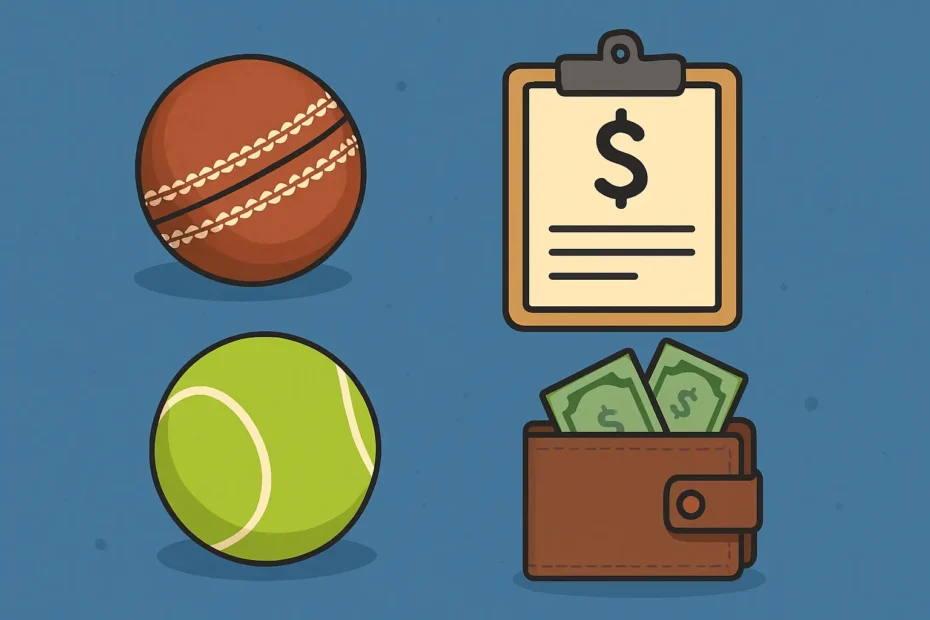
Floodlights bite into the evening haze. A white seam flashes past the camera and thuds into leather. It looks simple on TV, but anybody has held an IPL-grade white ball knows it feels like a small, exacting piece of engineering. The leather, the lacquer, the lower seam profile built for limited-overs pace—everything about it is tuned for a T20 night. That’s why the phrase “IPL ball price” triggers two very different searches in India: one for the official white leather match ball, and another for the heavy tennis ball that local players often call the “IPL ball” in street and tournament lingo.
I’ve tested, purchased, and argued over both in dressing rooms, on club sidelines, and with equipment managers across grounds. What follows is a straight-talking guide to the ipl ball price landscape in India—what’s used in the league, how much the original costs, smart alternatives from Kookaburra, SG, SS, DSC, Gray-Nicolls, and the best heavy tennis-ball options (Vicky, Nivia, Cosco) that players buy by the dozen. If you want the authentic ipl official ball price, the ipl tennis ball price, or the right place to buy ipl ball online without getting stung by counterfeits, this is the page you bookmark.
Quick answer: What ball is used in the IPL, and how much does it cost?
- The ball used in IPL matches: Kookaburra white leather ball, match grade, four-piece, hand-stitched, built for T20. It’s the same white-ball lineage used for international limited-overs cricket with Kookaburra’s lower seam profile and a protective white finish.
- IPL match ball price in India (retail): A single Kookaburra match-grade white ball typically retails in the premium bracket. Expect the authentic ipl ball price to commonly sit in the higher-thousands per piece from authorized dealers. Packs of six are available at bundled rates.
- Street and local tournament “IPL ball” (tennis-ball cricket): This refers to heavy tennis cricket balls, not leather balls. Vicky, Nivia, and Cosco dominate. The ipl tennis ball price generally ranges per piece in the double-to-low-triple digits, with value in buying dozens.
Those two markets are different worlds. Let’s walk both.
The official IPL white ball: construction, feel, and why Kookaburra rules T20 nights
Kookaburra’s white ball is a four-piece, premium leather ball made for the hard-hitting rhythm of T20 cricket. The defining traits any equipment nerd looks for:
- Leather and finish: Alum-tanned white leather with a protective finish that guards against discoloration and moisture. The finish affects swing behavior and how the ball scuffs, particularly against abrasive outfields and power-hitting.
- Four-piece build: A layered cork-and-rubber core wound with high-tension yarn, encased in four leather quarters. Four-piece construction keeps the ball round for longer and holds its behavior better through 20 overs of punishment.
- Seam profile: A characteristic lower seam than SG or Dukes-style balls. You can feel this with your thumb; the seam sits flatter, encouraging truer bounce and more predictable skid for white-ball cricket. It favors batters late in the innings, but early swing and wobble are still real in the right hands and conditions.
- Stitching: Multiple rows of stitching around a pronounced central seam. On match-grade Kookaburras, you’ll see consistently tight, even stitching and neat seam alignment. The seam thread is thick, the stitch count symmetrical, and the join is near flawless.
- Weight and size: Men’s limited-overs standard—approximately 156 grams in weight and 224–229 mm in circumference. If you pick up something claiming to be an “IPL ball” that feels notably lighter or heavier, that’s your first red flag.
Why this ball and not something else in a country where SG is king in red-ball cricket? Because Kookaburra’s white-ball behavior—particularly the seam profile and finish—has become the template for limited-overs, including T20 franchises. It stays hard and bright long enough for the ball to zing across the infield, while the seam and lacquer wear in a way that keeps the contest lively without the exaggerated late movement a taller seam can create.
IPL ball price in India: authentic Kookaburra white ball price bands
Retail pricing fluctuates across sellers, city taxes, import cycles, and special packs, but after years of tracking and buying, the market reality looks like this:
- Kookaburra white match ball (authentic, match grade)
- Single-ball pricing: Premium tier per ball from authorized dealers.
- Pack of 6: Bundled discount that still sits firmly in the premium tier.
- Expect slight variance across cities like Delhi, Mumbai, Chennai, Kolkata, Hyderabad, and Bangalore due to freight and local margins.
- Kookaburra alternatives within the brand
- Turf/Elite/International-grade white variants: All premium, built to match or near-match specs with minor finish changes. Prices cluster close to the official tier.
- County/Club white balls: Mid-to-upper range. Great for competitive club T20s where you want Kookaburra feel without full match-grade spend.
- Training/Practice white: Mid to lower-mid range. Suitable for nets; don’t expect the same lacquer longevity or seam integrity under floodlights.
If you’re aiming to buy ipl ball online, you’ll see price anchoring from marketplaces. Be careful: the lowest listings are often mislabelled grades, older stocks, or replicas. Authenticity trumps a quick discount when you’re paying premium rates.
How to identify an original Kookaburra white ball: a quick authenticity checklist
Counterfeits and misgraded balls exist, especially around big tournaments. Here’s what I look for before calling something the original ipl ball:
- Hologram or security marking: Latest retail batches carry brand security elements. Check for any tampering.
- Logo and embossing: Kookaburra’s bird and text should be crisp, deeply pressed, and aligned. Off-center or shallow stamps are warning signs.
- Model stamp: Clear mention of the specific model line. “Turf,” “Elite,” or similar match-grade designation should be unmistakable.
- Seam and stitching: Tension is consistent, stitching is straight, and the join has no gaps. A wavy seam or soft, spongy stitch feel signals a knock-off or sub-standard grade.
- Leather quality: Even grain, consistent dye across panels, and a uniform topcoat. No blotches, no patchy finish.
- Weight and balance: The ball should sit at standard weight and feel centered when balanced on two fingers. Obvious imbalance is a quality fail.
- Seller credentials: Buy from an authorized Kookaburra distributor, top-tier sports retailers, or established cricket-specialist stores with traceable invoices and return policies.
- Packaging and documentation: A proper box or six-pack crate with model and batch details. Loose ball sales with no paperwork are risky for premium models.
Kookaburra vs SG vs SS vs DSC vs Gray-Nicolls: white leather options and price feel
If the ipl official ball price stretches your budget, you’re not alone. For leagues, academies, and college tournaments, brands like SG, SS (Sunridges), DSC, and Gray-Nicolls offer white balls at different price-performance points.
- SG white cricket ball price
- Range: Mid to premium depending on model. SG’s red-ball reputation is unmatched in India; their white balls are consistent, good seam bite, a tad more pronounced seam feel than Kookaburra.
- Use case: Serious club T20s, college leagues, practice matches where seam feedback for bowlers matters.
- SS white cricket ball price
- Range: Mid. SS punches above weight in value. The leather feel is solid; the seam is a touch softer than SG at the same tier, making it friendlier for prolonged practice sessions.
- Use case: Nets, lower-division T20 competitions, academies chasing consistency across a season’s stock.
- DSC white cricket ball price
- Range: Low-mid to mid. A strong value brand. Some models scuff faster on rough outfields, but the out-of-the-box shape and seam are honest for the price.
- Use case: Training loads, schools, community tournaments.
- Gray-Nicolls white ball price
- Range: Mid to premium for imports. Beautiful finish; can be pricey due to import duty and limited distribution.
- Use case: Showpiece fixtures, serious club games, collectors who like branded variety in the kit room.
Red ball vs white ball price in India: why the white can cost more
Red leather has a different tanning process and a durable dye that weathers differently from the protective finishes used on white balls. White balls often carry added finishing steps to meet broadcast and visibility standards under lights, which can put them at equal or higher pricing compared to red balls at the same brand grade. That’s why the ipl white ball price sits high in the catalog.
Four-piece vs two-piece: price and performance
- Four-piece balls: Tighter control over shape retention and seam integrity. Mandatory for match-grade. They cost more for good reason.
- Two-piece balls: Practice or school-grade white balls are often two-piece. Affordable, decent for nets, but they lose shape quicker and give unpredictable rebound when hammered.
IPL ball vs ODI ball: subtle differences, same DNA
In limited-overs cricket, Kookaburra’s white ball family governs both T20 and ODIs. The IPL ball and the ODI ball share construction traits; any “T20” tag typically refers to batch selection and finish tuning for the format. Main difference is usage. ODIs use two new white balls, one from each end; T20 uses a single new white ball per innings. This impacts wear patterns more than the factory build.
How many balls are used in an IPL match?
A match starts with one new white ball per innings. However, replacements are common:
- Lost ball into stands or damaged by impact: Umpires bring out a box of used-but-condition-matched replacements.
- Wet ball in heavy dew: Towels, sawdust, and box rotations come into play. You may see more than two balls used across a match due to damage or loss, but only one is “the” ball at a time per innings.
How long does a white ball last in T20?
In ideal conditions, a match-grade white ball stays hard and bright enough for 20 overs, but behavior changes within overs:
- Overs 1–6: New-ball swing and a slick finish. Slip cordon dreams.
- Overs 7–12: The seam settles. Cross-seamers and cutters grip the lacquer scuffs.
- Overs 13–20: The ball is marked but firm. Yorkers and back-of-the-hand slower balls thrive. Under heavy dew, the finish can absorb moisture and feel heavier, so teams alter field placements and go fuller.
Maintaining a white leather cricket ball: field and practice sets
The best sides don’t leave ball care to chance. Even at club level:
- Keep a dry, clean towel in the captain’s pocket. Dry the ball after dew or sweat.
- Clean with a barely damp, soft cloth after play. Never soak. Dry naturally.
- Avoid harsh polish; a tiny smear of ball wax used sparingly keeps the surface tidy.
- Store in a breathable cotton bag away from heat. Leather hates extremes.
- Rotate balls in practice. Separate match-grade whites from net balls. Once a match ball is scuffed, retire it to nets, not the next league day.
Price watch: where to buy the official IPL-style ball without overpaying
If your goal is “ipl ball original buy,” the safest route:
- Brand-authorized stores and online brand outlets: Kookaburra’s official distributors, known cricket specialists, and top sports chains stock proper match-grade whites with bills and warranty.
- Marketplaces with scrutiny: Amazon, Flipkart, and Decathlon list Kookaburra, SG, SS, DSC, and Gray-Nicolls. Filter by “Fulfilled” or seller rating and always read recent buyer images.
- Specialist cricket retailers: Sportsuncle, Cricket Best Buy, CricketStoreOnline (India), and similar stores stock current batches, offer grading clarity, and pack balls properly for shipping so seams aren’t flattened.
Avoid generic “IPL ball” listings with a too-good price. The phrase attracts replicas. Make sure the listing says Kookaburra white match ball or the exact model and shows real photos of stamp and seam.
City notes: ipl ball price in India’s major hubs
You’ll see marginal price variation city to city due to duty, shipping, and local supply.
- Delhi: Strong distribution, competitive rates for Kookaburra and SG. Wholesale markets often have mixed-grade stock; verify model stamps.
- Mumbai: Premium sports outlets at the western suburbs and South Mumbai carry match-grade whites and top-of-the-line tennis balls. Expect polished merchandising and smaller discounts.
- Chennai: Traditional cricket culture keeps stock predictable. Good for bulk buys via academy channels.
- Kolkata: Solid SG and SS availability. Imported Kookaburra whites can be slightly pricier.
- Hyderabad: Emerging specialty stores; check the newest outlets for authorized Kookaburra stock.
- Bangalore: A rich club scene means healthy rotation of match-grade whites. Many retailers know their grains and seams; they’ll let you inspect.
If you search “ipl ball near me” or “ipl ball shop near me,” call ahead and ask for exact model names and whether they’re willing to open a box for seam inspection. Reputable stores will.
The “other IPL ball”: heavy tennis-ball cricket and what you should pay
Across India, “IPL ball” in local tournaments doesn’t mean leather. It means heavy tennis balls designed for cricket—firmer core, denser felt, sometimes a ridge for grip. These are used on turf, matting, concrete, and school grounds where leather balls would scuff or bounce too low.
Typical ipl tennis ball price ranges:
- Vicky IPL tennis ball price: Per piece typically sits in the high double digits to low triple digits depending on the exact variant and whether you buy singles or dozens. Per dozen discounted.
- Nivia IPL tennis ball price: Similar to Vicky; expect consistent bounce and good felt life. Per dozen usually comparable to Vicky’s.
- Cosco cricket tennis ball price: Often a touch more affordable in bulk. Per piece in the mid to high double digits; per dozen value-friendly.
- Stumper/Season balls: Some call the heavier, firmer models “season balls.” Prices generally overlap with the above, sometimes a small premium for extra firmness.
If you buy ipl tennis ball online, watch for:
- Authentic brand packaging: Vicky, Nivia, and Cosco box or shrink wrap dozens with clear labeling.
- Consistent batch: The biggest frustration is mixed bounce in one dozen. Buy from sellers known to move stock quickly so you get a single, fresh batch.
- Felt density: Too fluffy and it dies in dew. Too sparse and it burns on concrete and loses pace. You want dense, uniform felt.
- Weight and firmness: “Heavy” should mean stable on a mat and consistent through the air. Overly heavy balls can strain wrists and shoulders in young players; avoid extremes in junior cricket.
Heavy tennis-ball cheat sheet for conditions
- Concrete box cricket: Slightly lighter heavy-ball variant helps avoid skidding too low. Cosco and Nivia regular heavy models shine.
- Coir or jute matting: Heavier variants grip better and keep knee-level bounce. Vicky’s thicker-core options are popular.
- Turf or school grounds: Moderate heavy ball, not a rock. The ball should carry to midwicket without forcing a slog every ball.
Safety note: Heavy tennis balls can cause elbow and shoulder niggles if overused in the wrong age groups. Rotate drills, limit overs for bowlers, and mix with regular tennis balls during high-rep sessions.
Price comparisons people actually care about
- Kookaburra vs SG ball price: Kookaburra sits higher for white match grade. SG offers strong value from mid to premium tiers. If you need international white-ball behavior, Kookaburra. If your bowlers want a taller seam feel and your budget appreciates it, SG’s upper models work.
- Red ball vs white ball price: Whites can cost the same or a touch more due to finish. Don’t assume a cheaper red equals the same-grade white.
- 4-piece vs 2-piece cricket ball price: True match-grade whites are four-piece and priced accordingly. Two-piece whites are practice or schools.
- Kookaburra Turf vs County vs Club price: Turf sits at the top, County mid-high, Club mid. Buy according to the stage—showpiece match vs league vs nets.
- IPL ball vs Test ball SG: Different codes. IPL uses white—Kookaburra. Test matches in India lean SG red with a higher seam. Price apples to oranges: different finishes, different use cases.
Professional buying advice: matching ball to the day
- Best white cricket ball for T20 nights: If the budget allows, buy the Kookaburra match-grade white. Its finish and feel under lights are built for the format.
- Best cricket ball under 2000: You’re in quality practice/entry match territory. Explore SG, SS, and DSC whites clearly labeled match or club grade. Verify 4-piece.
- Best cricket ball under 1000: Nets and school matches. Don’t expect full match-grade seam stability. Keep these for throwdowns and bowling machine work to save your premium whites.
- Budget white leather cricket ball: Pick a brand with consistent QC. A mid-priced SG or SS often outperforms a cheap “no-name four-piece” with a shiny finish and poor leather underneath.
What a kit manager checks before signing off on a batch
- Bounce test on a hard surface: Drop from shoulder height. Listen for the tone as much as the height. A dull thud can mean a soft core or poor winding.
- Seam inspection: Run a thumb across the seam. You should feel firm, even ridges without any soft spots.
- Balance: Spin the ball on your palm; it shouldn’t wobble. A good ball feels centered.
- Finish consistency: All six in the box should look identical in color, gloss, and stamp placement. Mixed appearances can hint at mixed batches.
Why white balls are used in the IPL
Under lights, the white ball is far more visible to batters, umpires, and viewers than a red ball. The white finish behaves differently than red dye but meets modern broadcasting needs. The trade-off—color loss and finish wear—is handled by ball selection, maintenance, and the short format’s limited overs.
IPL ball weight, size, and seam detail
- Weight: Around 156 grams for men’s T20.
- Size: Circumference around 224–229 mm.
- Seam height and stitching: The Kookaburra white’s seam is intentionally lower than SG’s tall-red seam, with multiple rows of tight stitching around the equator. Stitch count is uniform, and the seam’s tactile feel is distinct—firm but flatter than a Dukes-style test ball. Bowlers adapt by using wobble seam, cutters, and cross-seam deliveries for deviation.
Match-used IPL balls and the memorabilia market
“Match used IPL ball for sale” queries spike around knockouts. Genuine match-used balls typically come via:
- Official auctions and team stores with Certificates of Authenticity.
- Charitable auctions with traceable provenance.
If you see a suspiciously cheap “match-used IPL ball,” assume it’s a regular Kookaburra white with a story. Genuine pieces carry COAs, event details, and verifiable photos.
Maintaining your leather whites like a pro
- Before play: Keep them in a cool, dry place. Avoid leather drying under direct sun.
- During play: Use a clean towel; nominate one player to care for the ball between overs. Sweat, not lip balm. No artificial substances.
- After play: Wipe gently with a slightly damp cloth to remove soil. Dry in shade. No hairdryers or heaters. A pea-sized dab of approved wax spread thin can tidy the surface; don’t smother the leather.
- Storage: Breathable cotton or microfiber bag. Not a sealed plastic container.
Buying online vs local shops
- Buy ipl ball online when you need variety of models, traceable seller ratings, and easy returns. Major marketplaces and specialty cricket stores shine here.
- Buy from a local pro shop when you want to feel the seam and check the batch. Many city retailers will let you open a box and inspect one ball from a six-pack.
Cricket ball wholesale price and academy planning
For academies, savings comes from volume and right-grade segregation:
- Match-grade whites: Limited to official fixtures. Track usage and retire them after one or two high-intensity innings to nets.
- Nets-grade whites: Separate crates. Cheaper models for throwdowns, sidearm drills, and bowling machines so your best leather lasts.
- Tennis balls: Buy dozens at a time from steady sellers to keep bounce consistent. Reorder the same batch code when possible.
Why dew changes everything
Dew adds mass to the surface finish and reduces grip. Seamers compensate with cross-seamers and wide yorkers; spinners rely on overspin and body speed rather than hard-finger grip. If you’re choosing between brands and you know you’ll play in dew-heavy evenings, pick a white ball with a proven finish and seam you trust. Kookaburra’s premium coatings hold up better than budget whites in wet conditions, which is exactly why the ipl official ball price sits where it does.
Ten mistakes people make when buying an “IPL ball”
- Confusing tennis “IPL balls” with the official white leather ball.
- Buying by price alone and getting a two-piece when they needed a four-piece.
- Ignoring the seller’s authorization status.
- Skipping the seam check. A sloppy seam is performance death in T20.
- Not matching ball grade to format and ground (premium white on abrasive concrete is a waste).
- Using match-grade whites for throwdowns and machine work.
- Buying a mixed batch online without reading reviews or checking return policies.
- Storing whites in a plastic bag, trapping moisture and killing the leather.
- Expecting a cheap white to behave like a Kookaburra match ball under lights.
- Ordering late and playing with a ball still stiff from a cold storeroom. Always acclimatize the match ball in the kit room ahead of the game.
Frequently asked questions, answered simply
Which brand ball is used in IPL?
Kookaburra white leather, match grade.
What is the official ipl match ball price?
Premium tier per ball in India from authorized sellers. Packs of six come slightly discounted but remain premium. Avoid listings that seem too cheap to be genuine.
What is the ipl ball weight and size?
Approximately 156 grams, circumference around 224–229 mm.
Why is a white ball used in the IPL?
Visibility under lights and for television. The white finish is designed for limited-overs cricket.
How many balls are used in an IPL match?
One new ball per innings, with replacements from a condition-matched box if lost or damaged.
How do I identify an original Kookaburra white ball?
Look for security marks, crisp embossing, exact model stamps, consistent stitching, correct weight, balanced feel, and reputable seller credentials.
How long does a white ball last in T20?
The full innings in normal conditions. Behavior changes as overs progress; dew accelerates surface change.
What’s the difference between the IPL ball and the ODI ball?
Same family of Kookaburra white balls. ODI uses two new balls in an innings, T20 one. Build and finish are near identical; usage pattern differs.
What is the best white cricket ball for T20 if I’m not buying Kookaburra?
A high-grade SG or Gray-Nicolls white can be excellent. SS and DSC offer value tiers with honest performance at lower price points.
What is an “IPL tennis ball” and what does it cost?
A heavy tennis ball used for cricket. Brands like Vicky, Nivia, and Cosco sell them per piece or dozen in accessible price bands, with discounts on bulk.
Buying guide snapshots
If you’re a club captain looking to balance performance and budget:
- Match day under lights: Kookaburra match-grade white, one or two per game depending on dew and boundaries.
- Daytime league on average outfield: Upper-mid SG white or Kookaburra County/Club; protect the ball from rough concrete between overs.
- Nets: Two-piece whites or mid-grade whites that don’t break the bank. Save your best leather for actual matches.
If you’re organizing a tennis-ball tournament:
- Pick a brand and stick with one model to avoid bounce lottery.
- Buy in dozens from a seller with fast-moving stock, not a dusty warehouse.
- Test two or three models in your exact conditions—concrete vs matting changes everything.
- Keep a spare crate for quick rotation when balls get waterlogged.
Where price meets performance: a simple value lens
- Authentic ipl official ball price buys you predictability—roundness, finishing, seam longevity, and behavior in dew. That predictability is what bowlers and captains crave.
- Mid-range white balls buy you reliability—adequate seam, decent shape retention, and honest scuff patterns. Perfect for clubs and colleges.
- Budget whites and two-piece options buy you volume—great for training loads, throwdowns, and saving your best balls for the big day.
- Heavy tennis balls buy you accessibility—fast-paced fun on almost any surface, with costs that suit mass participation and frequent replacements.
Caring for your investment
When a team spends on a set of match-grade whites, the job isn’t done at checkout. Appoint a ball manager. Keep a sealed packet of soft cotton cloths in the kit. Store whites in a ventilated, padded section of the kit bag. Log each ball’s usage in overs. Rotate after high-impact games and retire to nets with a ceremony if you must. It’s culture. It also saves money.
Final word: choose with intent
People use “IPL ball” to mean two very different things—Kookaburra’s white match ball and the heavy tennis balls that fuel local tournaments. Both are wonderful, in their own ways. One is a bright, stubborn piece of craftsmanship that survives the glare of TV lights and bludgeoning bats. The other is a joyous, accessible workhorse that powers gully nights and matting tournaments in every Indian city.
If your intent is the official ipl match ball price, shop authorized, inspect the seam, and pay for the real thing. If your intent is the ipl tennis ball price, pick a brand, test in your exact conditions, and buy by the dozen. Above all, match the ball to the day you’re trying to create. That’s the real secret behind every smart purchase—knowing the game you want to play before you walk into the store or click “Buy.”
